‘Moss: The Forgotten Relic’ is coming to PC and consoles on July 16th
Press release:
Seattle, Washington (June 6, 2026) | Today at IGN Live, Polyarc — a multi-award-winni[...]




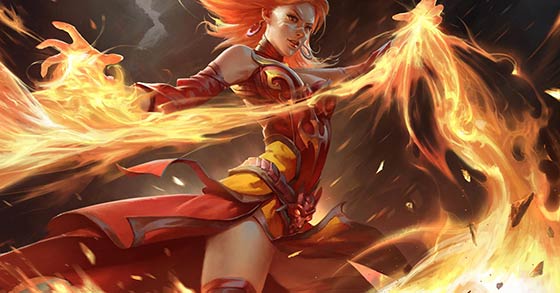
Since Ti4, roster shuffles have become more prevalent, but why do players need to shuffle?
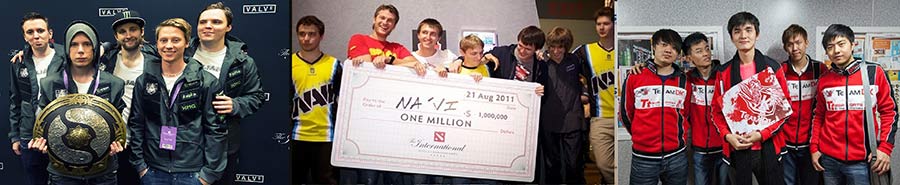
Na’Vi, Alliance and DK in their respective glory days
“Farewell, Natus Vincere Dota 2 Roster”. If you haven’t been shocked yet, then you heard it here first. The team that defined “champion” for Dota 2’s first ever major has finally disbanded after a long, torturous journey for its antiquated line-up. XBOCT and Dendi, founding members of Na’Vi, have already become household names for the aggressive and confident style that characterizes CIS dota, with Funn1k only lagging behind by 2 years. These 3 names have formed the triple-core of Na’Vi since 2013, and they have played the same type of “Na’Vi Dota” since then.

Dendi, XBOCT and Funn1k, the three cores of Na’Vi since 2013.
Dendi in the mid lane. XBOCT on the safe lane. Funn1k on the off lane. If you understand your opponent and exactly what they will be doing, you are already ahead of them. Granted, this should be common knowledge, but in the SEA scene (previous household names Zenith, Titan and Orange Esports) and more notably in Ninjas and Pyjamas and (monkey) Business, player positions can and will be switched around. This adds an additional dimension to the draft, and Dota 2 is all about the drafting stage which can make or break the entire game. Na’Vi has stagnated since ti3, much like how the current iteration of Alliance is similarly built around s4, AdmiralBulldog and Loda once again. Na’Vi, in remaining the same, has lost the element of surprise against their opponents, and they have already conceded any ability to strategize during the drafting stage.

iG showed some great new innovations against Newbee, but lacked the execution to close out the game as they still leaned towards their old, conservative style of late-game Dota.
Team chemistry is the key in strategizing during the drafting stage of a Dota 2 game. On the professional level, each team has a coach and probably an analyst to guide them through their opponent’s tendencies and known strategies. They picked a wisp, ban Tiny or pick it, or simply draft a counter to Tiny/Wisp. Team chemistry is not some psychological bullshit here. It’s simply what elements each player brings to the table, and how the drafter for the team is able to tinker up a hell of a draft result with what they are given. Speaking metaphorically, when your everyone knows what elements, your team brings to the draft, every combination and reaction is predictable. Unless your team can do the same to the opponent, your team starts at a disadvantage. Shuffles are necessary to change-up the compositional possibilities of each team and “shake things up,” so to speak, to prevent opposing teams from easily predicting what everyone on your team will do and play around that fact.
The disbanding of Na’Vi will only do them good. Since Ti1, no identical team has won another major title twice in a row. The winner always gets their gameplans dissected, and after their holiday, they will be facing teams who know them better than they know themselves. Na’Vi was figured out since Ti1, and although all their players are incredibly mechanically gifted, there are simply some things that mechanics cannot overcome. If your team is predictable, eventually it will look like the enemy is playing with their fog of war off. Your team has to adapt to the enemy and still remain unpredictable. The ability to adapt to the enemy team was the greatest strength of Team Secret as they had proven during this past year, winning every major competition pre-Ti5. However, they were still figured out and dissected, and they ended up at 7 – 8th place in a competition they were highly favored to win.
Do not underestimate the stress that competition brings. Under different conditions, perhaps Singsing’s complaints of “We focken lost” would be humorous to the team and bring them out of an emotional down after a loss. Under the conditions of any Majors henceforth (and onwards), players will face the same stress that high-roller poker players face, however, with much less experience both in terms of age and in terms of competition. Dota 2 is still a young Esport, as even veterans barely have five years of large-scale competitive experience under their belt.
Team chemistry, in terms of how team members interact with each other needs to be mutually encouraging so as to lessen the stress of competition. Ti 4 onward, the stakes were so high that winners had little to no reaction but to be utterly overwhelmed by their win. You see emotionless and tired players. I see people who are totally unable to comprehend exactly what their win means to them. Competition stress places a burden on the team to maintain their positive rapport to prevent stress-habits from emerging from each team member. Stress behavior is both spectacular and explosive, as spectators homed onto Team Secret’s televised arguments as evidence of their tilting.
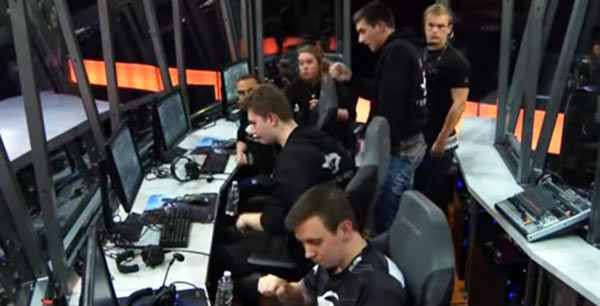
An agitated Arteezy after Team Secret’s loss and elimination in The International 5.
We all can’t get along. A good player of Dota 2 might have horrible inter-personal communication skills. Sure, not everyone might be easy-going, but there are teams with people who keep it together very well in the scene (Vega, CDEC, EG) and being hard to communicate with only makes your team start at a disadvantage. Team shuffles are absolutely necessary to swap out team members who cannot contribute to the team’s mental stability as well as play style, especially now that the margin for error for teams to win is rapidly shrinking due to recent patches. I expect that more teams will play around with roster tryouts once the Frankfurt major is over, as the only way you can really know if you’ve assembled a winning team is to win something first. That’s why Team Secret stayed together in spite of communication issues within the team (which surfaced during Ti 5) — they were a winning formula for every single major competition up till Ti 5.
You can follow me on twitter @TheFreakofnatur and email me at [email protected]. Until next time!

Chen Yiji
The Gaming Ground
Twitter: @TheFreakofnatur
More by Chen Yiji:
Tags: Defense of the Ancients 2, DOTA 2, MOBA, Team Chemistry in Dota 2, Valve