‘Red Kiss’ is coming to XBOX and Game Pass on day one
Press release:
October 20, 2026 - As revealed during IGN x ID@XBOX, indie developer Wispfire and nar[...]





Maths and Poker are fundamentally linked. The great poker players use maths to help guide their decision making process. They use statistics to identify how strong their hand is, and probability to work out if their opponents hand is stronger than theirs.
It is not a perfect science, as poker also bringing in additional elements such as bluffing and the need to read other people, but understanding mathematical concepts is key to inform their behaviour at the poker table.
There are some players who purport to play intuitively, by feel and by reading their opponents, and these players can be very successful. However, by using the right math to guide their decision making, they could be even better. Mathematics in poker is not an absolute must, but will help guide strong decision making, and make good players even better.
In terms of competitive poker, understanding at least the basic mathematical concepts is imperative, as all the top poker players will use it to increase their chances of success.
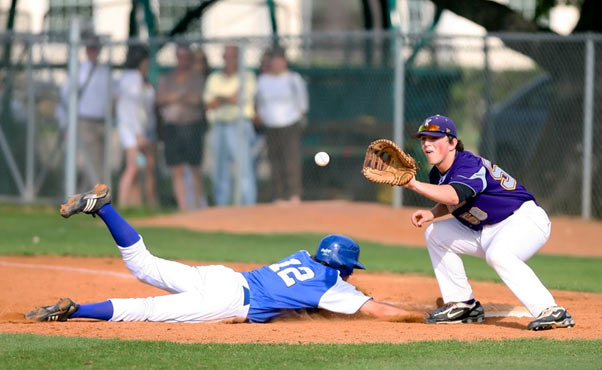
You can approve your chances at both gambling and sports with the help of math.
Whilst mathematics is usually associated with engineering and science, there is growing evidence that it plays a big part in making sports more efficient. Coaches, keen to improve their teams’ performance, are always looking for ways to get more out of their players. In baseball, for example, math can be used to identify the best batting order to maximise the number of runs.
Olympic skaters and coaches will use math to design routines that make the most of the scoring system available, maximising difficulty levels and points before fatigue sets in. Most sports, be they ‘intellectual’ like bridge and chess, or ‘physical’ such as soccer and cricket, will use elements of math to help drive performance.
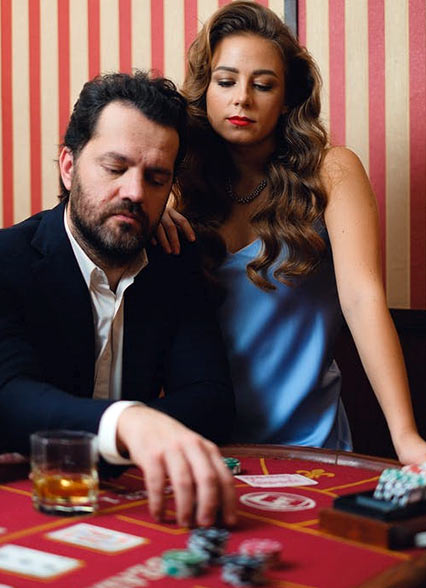
Do you feel lucky punk?! Or perhaps I should ask “Are you good at math?”.
When playing poker, players need to decide whether they will fold, call, or raise, and this decision will be impacted by two main things:
1. How many Outs are available
This is the cards that need to be drawn to form a winning hand. For example, if there is only one card that will complete a set, the likelihood of this happening is much lower than if there are four cards that could make a winning hand.
There is a quick and easy way to calculate rough odds to help guide decisions, known as the Rule of 4 and 2. It allows players to quickly calculate if they should continue, and how much they should risk. The figures it gives are not exact, but are quick and easy to calculate off the cuff.
So if there are 4 possible outs after the flop, the probability of getting the right card using this rule is 16%; when doing more detailed math the figure is 17.2%. If after the turn there are 4 possible outs, that figure is 8% (9.1%).
2. The Pot Odds
This is how much money could be won relative to the size of the bet, and if it is worth the risk. For example, a 50c bet for a million dollar win is worth it pretty much all the time, whereas a 50c bet for a potential dollar win less so.
There is a very simple calculation that players can use to work out how much money they will get in return for their bet.
So, if the pot is currently at 20c, the bet is 10c, the total pot is 30c, meaning that the pot odds are 30/10 = 3 to 1. This means that to break even the player would need to win once for every 3 losses.
By expressing this against a factor of 1, it is fairly easy to express this as a breakeven percentage.
In this example, the breakeven percentage = 100 / (3+1), which is 100/4, meaning the breakeven percentage is 25%.
Players will know whether to call or not based on combining the probability of hitting an Out and the breakeven percentage. If the probability of hitting an out is greater than the breakeven percentage, it is worth calling, but if the probability of hitting an out is less than than the breakeven percentage, it may be more advantageous to fold.
For example, if the probability of hitting an out is 50%, and the breakeven percentage is 25%, then what this means is that 50% of the time the player will hit a winning hand, but they only need to win 25% of the time to break even, so betting on these odds will be profitable in the long term.
This of course is only a brief overview of how to use basic probability to help guide a game of poker; there is much more complex math and calculations used by the professionals.
Most players will understand exactly what the odds of getting a specific card of suit will be, and how this changes as more cards are dealt, as the probability of being dealt an Ace is 1 in 13 if no cards have been dealt, but 3 in 51 if one has already been. There are online tools to help players understand their hands from a statistical point of view.
Additionally, players will use their experience and knowledge to help read their opponents. The math can give a rough idea of the odds of winning, but successful players will also take into account opponent behaviour and betting patterns. The bottom line is that poker is a game of many elements; bringing these together is a skill only a select few truly have.
***in cooperation with our partner***
More by Guest Author:
Tags: Casino games, Casino video games, Free spins, Gambling, Microgaming slots, Mobile games, Online Casino games, Poker, Slot machines